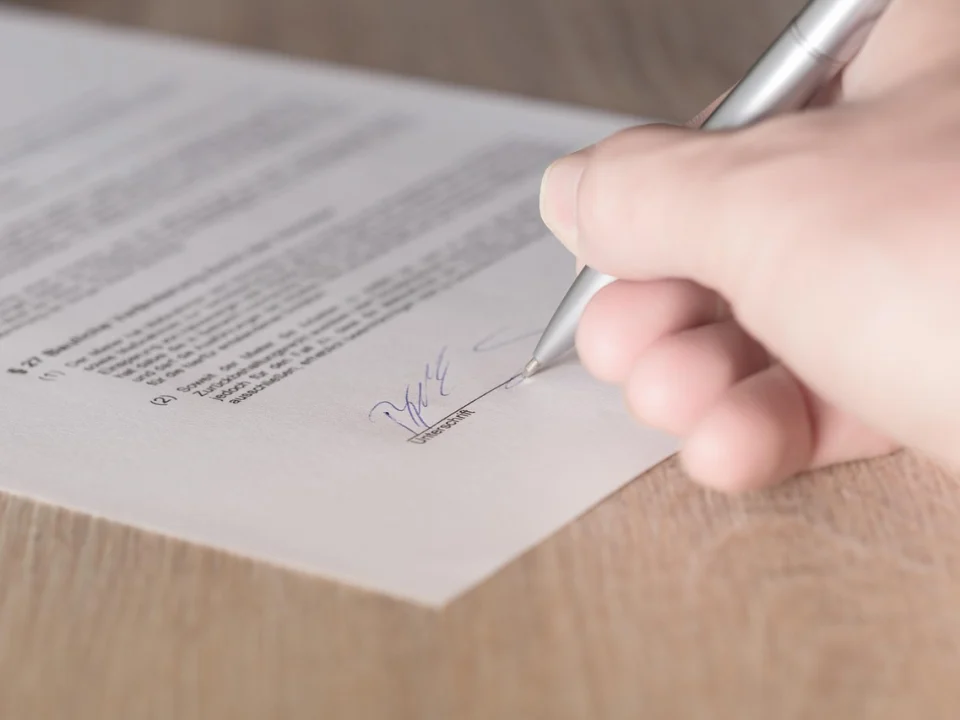
An estate can often skip full probate in one of two ways. Property that passes directly to a co-owner or a named beneficiary stays out of probate. And what’s left may be small enough for a state’s shorter route, such as a small estate affidavit: a sworn statement that lets the people who inherit collect property without a full court case. Whether either applies depends on how each item was titled, on the state, and often on the date of death.
This page is general information, not legal or tax advice. Estate law varies by state and changes. Ask the court clerk, or a lawyer or tax professional, about your case.
If someone has died, read on from here. If you’re planning for yourself or a parent, go to planning ahead. New to the word? Start with what probate is.
First, find out what probate reaches
Massachusetts’ court puts it simply: whether an estate has to be probated “depends on how the decedent’s (the person who has died) property is titled (owned) when they die.” Jointly held property with survivorship rights, accounts and insurance that name a beneficiary, and property in a trust the person created all pass directly.
So this is an asset-by-asset job. One house left in a sole name can need a court case even if every account passed directly. Our four-question test for when probate is required shows how to sort a list.
Three kinds of small estate route
If what’s left is modest, the next question is which short route your state has. The sources are in the table further down.
- Handed to the holder. The affidavit goes straight to the bank or company. California and Washington work this way.
- Filed first. The affidavit goes to a court or clerk. In Texas, a judge must approve it.
- A short court process. Florida uses a court petition, Ohio a court order, and New York an affidavit filed in the Surrogate’s Court.
The conditions are similar in most of the statutes we read: the estate is under the limit, any waiting period has passed, and no probate case is open or pending. Our guide to how a small estate affidavit works gives the steps, what to do if the bank says no, and the limit in every state we could read.
Why the dollar limit isn’t the whole answer
Two estates of the same size can land on different sides of the same limit.
- Does it pass through probate at all? Property with a surviving co-owner or a named beneficiary generally isn’t counted, but each state writes its own list.
- Is the limit gross or net? Net means after liens, such as a mortgage. A $300,000 house with a $200,000 mortgage counts as $300,000 in a gross test, as in California, and $100,000 in a net one, as in Washington.
- Does it count everything, or only personal property? New York tests personal property only. Washington tests the entire probate estate, so a house in the person’s name alone can put a small bank account out of reach.
- When is it measured? Texas uses the date of the affidavit, Virginia the date of death.
- When did the person die? Limits move, and old figures linger. California’s self-help page still showed $184,500 when we read it on 5 November 2026, while the court’s form DE-300 gives the higher figure below.
State guides
These eight pages go through each state’s conditions, forms, costs and traps. The table shows only the headline rule, not every condition. All were read on 5 November 2026.
| State | Route | Limit | Wait after death | Law read |
|---|---|---|---|---|
| California | Affidavit to the holder | $208,850 gross, with exclusions, for deaths from 1 April 2025 | 40 days | Form DE-300; Prob. 13100 |
| Florida | Summary administration, a court petition | $150,000 after exempt property since 1 July 2026, or the death was more than 2 years ago | None stated | Fla. Stat. 735.201 |
| Illinois | Affidavit to the holder | $150,000 of personal property, registered vehicles left out, for deaths from 15 August 2025 | None in the statute | 755 ILCS 5/25-1 (General Assembly file repository, read 5 November 2026) |
| New York | Voluntary administration, filed in Surrogate’s Court | $50,000 gross personal property, leaving out property set off for the family | None | SCPA 1301, 1304 |
| Ohio | Release from administration, a court order | $35,000; $100,000 if everything goes to the surviving spouse | None stated | ORC 2113.03 (official Ohio code, read 5 November 2026) |
| Texas | Affidavit filed; a judge approves. No will only | $75,000 on the affidavit date, leaving out qualifying homestead and exempt property | 30 days | Est. Code 205.001 |
| Virginia | Affidavit to the holder, on form CC-1685. Any will probated first | $75,000 personal probate estate | 60 days | Va. Code 64.2-601 |
| Washington | Affidavit to the holder | $100,000 of the probate estate, after liens | 40 days, and 10 days after written notice to other successors | RCW 11.62.010 |
Florida’s higher limit has an unsettled question for deaths before 1 July 2026, and the Florida page explains it. For any other state, use the table in the main affidavit guide above. Where it shows “not confirmed”, ask the court.
The house is where many routes stop
Many affidavits move personal property only. Illinois’s, Virginia’s and Washington’s don’t transfer a home, and New York’s route doesn’t cover New York real property. The routes that can reach a home have their own rules:
- California: a separate court petition for a primary residence up to $750,000, for deaths from 1 April 2025 (Prob. 13151 and form DE-300).
- Texas: the affidavit can pass a homestead only if it’s the only real property, and in this law a homestead is a home that could be set aside for a surviving spouse or minor children. It can’t pass a parent’s home to grown children.
- Ohio and Florida: Ohio’s release can order real property transferred, and Florida’s summary administration covers real and personal property.
A home with a surviving co-owner or a transfer on death deed may not need any of this. That deed names who gets the property, without probate, where state law allows it, and the house still carries its mortgage. In some places an affidavit of heirship is used for land, which is a different paper with a different purpose.
What a short route doesn’t do
Where an affidavit goes straight to a holder, nobody checks your work.
- Debts don’t go away. As a rule, family members don’t owe a relative’s debts from their own money, the CFPB says, with exceptions; see does debt die with you. Taking estate property changes the picture. In California, the person who takes property by affidavit is personally liable for unsecured debts, capped at the property’s value less liens, unless an exception applies.
- There may be no creditor cut-off. Probate usually includes a formal notice to creditors. The hand-to-the-holder statutes we read don’t.
- Signing doesn’t make you the heir. If a will turns up, or a child nobody mentioned, the money may have to come back. North Dakota’s law is one example.
- Medicaid may have a claim. If the person received Medicaid long-term care, the state may seek repayment under federal law. See what Medicaid can take.
- Taxes still need doing. With no personal representative appointed and no surviving spouse, IRS Publication 559 says the person in charge of the property must file and sign the final return.
Planning ahead
While someone is alive, the aim is to leave nothing in their name alone at death. Four tools do most of the work: a beneficiary named on accounts and insurance, co-ownership with survivorship rights, a living trust, and a transfer on death deed where the state has one. A will doesn’t do it. Our guide to avoiding probate, and when it isn’t worth it compares each route, its catch and the fee figures we could read.
Whether it’s worth doing is a separate question. Beneficiary forms can cover a lot for little effort. A trust costs real money, and probate can be short and cheap in some states. Avoiding probate also doesn’t wipe out debts.
Your next step
Start with a list: each account, vehicle and property in the person’s name alone, what it’s worth, any loan against it, and the date of death. Add any will and a rough list of debts. Then call the probate court clerk in the county where the person lived and ask which small estate route fits that list and which form to use.
Sharing out the money can wait until you know the route and the debts. Ordering certified death certificates can’t really wait, because most routes start with one.
Talk to a lawyer before signing if a deadline is running, the will is disputed, you suspect fraud, the estate may not cover its debts, there’s a business, or the heirs are in conflict.
Sources checked on 5 November 2026.